
🏥 Earlobe Cleft (Split Earlobe) Treatment | Same-Day Surgery by Board-Certified Plastic Surgeons in Ikebukuro
“My earring got caught and tore my earlobe…” “I want to close my piercing holes before job interviews.” “I’d like to correct the shape of my ears, which I was born with.” — Earlobe clefts and piercing-related earlobe problems are concerns that affect not only appearance but also daily life.
At our clinic, board-certified plastic surgeons who perform hundreds of earlobe cleft surgeries each year use advanced techniques such as Z-plasty and W-plasty to achieve minimally visible, natural-looking results. Congenital earlobe clefts are eligible for insurance coverage.
💬 “What You Will Learn from This Page”
- ✅ Causes and types of earlobe clefts (including insurance eligibility)
- ✅ Surgical methods and fees (from approximately ¥30,000)
- ✅ Post-operative progress and scar visibility
⚠️ Leaving it untreated carries a risk of infection — early treatment is recommended.
👂 What Is an Earlobe Cleft? Two Types: Congenital and Acquired
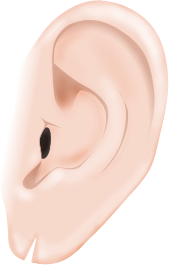
An earlobe cleft is a medical term referring to a condition in which the earlobe is split vertically. Based on the cause, earlobe clefts are classified into the following two types.
🔵 Congenital Earlobe Cleft (Split Earlobe Present from Birth)
This is a congenital morphological anomaly that occurs during the formation of the auricle (outer ear) in the fetal stage. The individual is born with a partial absence of the earlobe or a notch or cleft in it. The presentation varies significantly between individuals, ranging from a mild notch to a deep split. Congenital cases are eligible for health insurance coverage, and treatment is available for approximately ¥31,010 with a 30% patient co-payment.
🔴 Acquired Earlobe Cleft (Earlobe Tear Due to Piercings or Other Causes)
This refers to a condition in which the earlobe has been torn by external factors such as the weight of or snagging on a piercing. The majority of patients who visit our clinic present with this type, and the following are among the most common causes.
- 💍 Wearing heavy earrings continuously over an extended period
- 👕 Piercings getting caught on clothing or towels
- 🚨 Enlargement of the piercing hole due to inflammation from metal allergies
- 💉 Repeated suppuration (infection) of the piercing hole
- 👂 Stretching of the piercing hole due to a naturally thin or soft earlobe
In most cases, the earlobe does not tear suddenly, but rather the piercing hole gradually shifts downward over a period of months to years, eventually reaching the edge of the earlobe. The majority of patients come to us after noticing that an earring has fallen out and the earlobe is torn.
❌ Why a Torn Earlobe Will Not Heal on Its Own
Many people wonder, “Won’t it heal by itself if I leave it alone?” — however, unfortunately, an earlobe cleft will not heal naturally. Below, we explain the medical reason for this.
🔬 The Mechanism of Scarring (Scar Formation)
When the earlobe tears, the body’s natural healing response causes the torn surface to become covered by new skin. This process is called scarring (scar formation). Once two wound surfaces have been covered by skin, they will not reattach to each other even if held together. While this is a sign that the wound has healed, it is also the reason why the earlobe cannot return to its original form without surgery.
⚠️ Risks of Leaving an Earlobe Cleft Untreated
Leaving an earlobe cleft untreated carries the following risks.
- 🦠 Infection: Bacteria can enter through the cleft, potentially causing redness, swelling, and pain
- 📏 Widening of the cleft: Friction from daily activities may cause the cleft to expand further
- 😰 Psychological burden: May lead to anxiety in social situations or job-seeking, and can become a source of self-consciousness
We recommend consulting a plastic surgeon as soon as you notice symptoms.

🏥 Three Surgical Methods Performed at Our Clinic and How We Select the Right Approach
The earlobe is located on the side of the face and is an area where scarring tends to be noticeable, as it is not easily concealed by hair. At our clinic, we select the most appropriate surgical technique based on the condition of each patient’s earlobe and the pattern of the cleft.
1️⃣ Linear Method (Simple Suturing)
This method involves excising the scarred tissue along the torn area to a minimal extent and suturing the edges together in a straight line.
Indications: Mild earlobe clefts, piercing hole closure
Advantages: Because the amount of tissue removed is minimal, there is less likelihood of a size difference between the two earlobes
Post-operative scarring: Remains as a fine, straight line
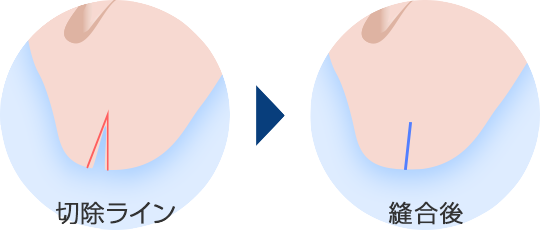
2️⃣ Z-Plasty
Z-plasty is one of the most widely used techniques in plastic surgery. Z-shaped incisions are made on both sides of the scar, and triangular skin flaps are transposed to redistribute the straight scar line.
Indications: Moderate to severe earlobe clefts; cases with scar contracture (tethering)
Advantages: Scars are less conspicuous, and notching (stepping) at the earlobe edge is less likely to occur
Post-operative scarring: Distributed in a Z-shaped pattern, making it less noticeable when viewed from the front
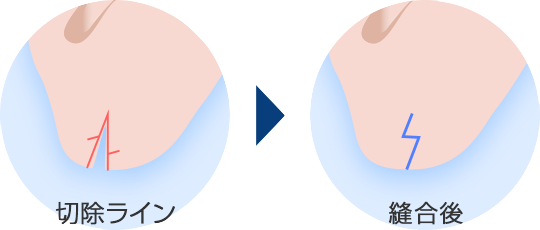
3️⃣ W-Plasty
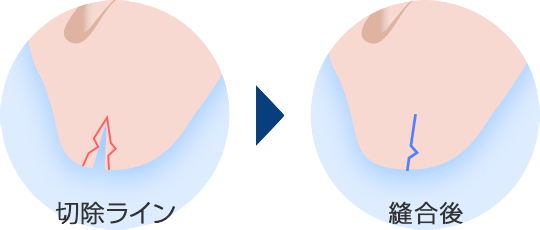
This method involves making W-shaped (zigzag) incisions along the edge of the earlobe and suturing the edges together. By distributing the straight scar into multiple short lines, the scar becomes less visually conspicuous.
Indications: Cases where the earlobe is completely split down to the edge
Advantages: Easier to recreate the natural curve of the earlobe
Post-operative scarring: Results in fine zigzag lines that tend to become nearly imperceptible over time
💎 Piercing Hole Correction and Closure
Even without a complete tear, many patients visit our clinic for piercing hole concerns such as the following.
- 📍 The piercing hole has stretched vertically (become teardrop-shaped)
- ⭕ Wishing to close a gauge (body piercing) hole
- 💼 Wanting to make piercing holes less noticeable for job hunting or a career change
- ↔️ Wishing to change the position of a piercing hole
Depending on the size and condition of the hole, the skin around the hole is excised under local anesthesia, and the earlobe is reshaped into a natural form using plastic surgery suturing techniques.
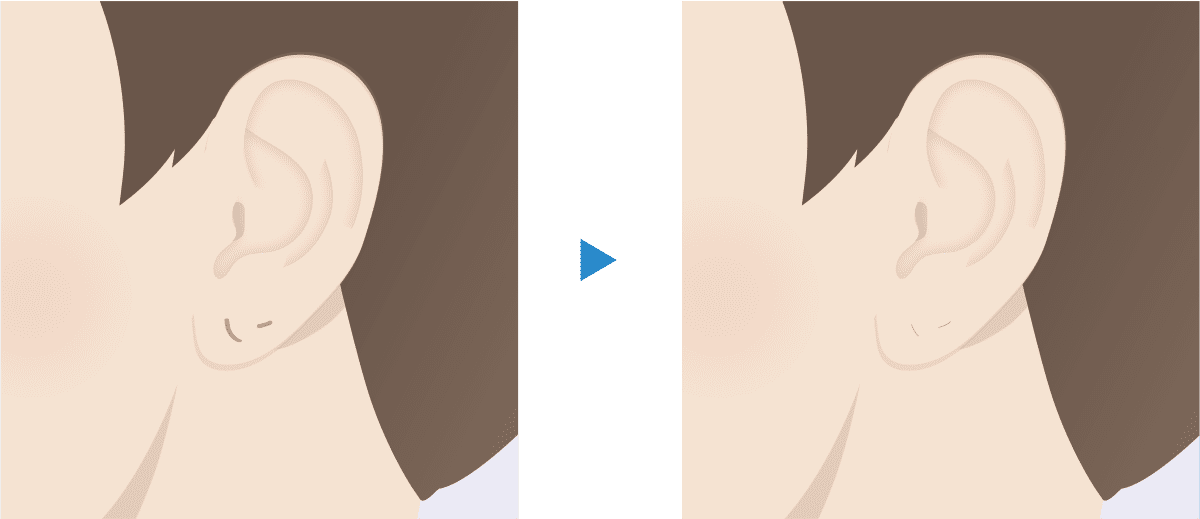
📸 Overview of the Surgery Process [Explained with Clinical Photos]
Here we introduce the earlobe cleft surgery process at our clinic, illustrated with actual clinical photos.
STEP 1: Pre-Operative Assessment
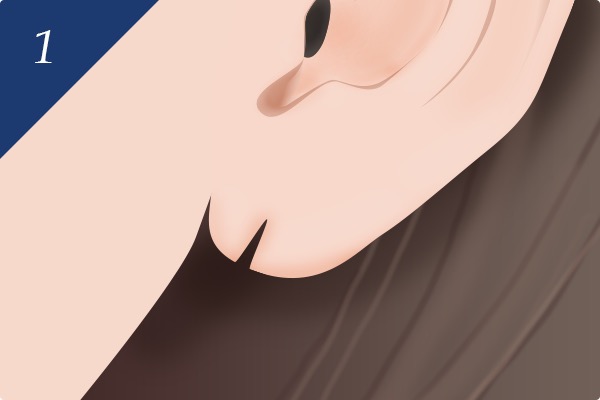
The earlobe is split vertically and completely separated. Both sides of the cleft have already undergone scarring, and natural healing is not expected.
STEP 2: Surgical Design and Marking
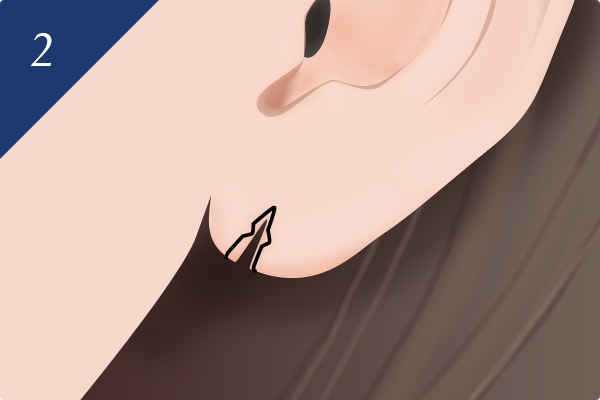
The shape of the patient’s earlobe and the pattern of the cleft are assessed, and the most appropriate surgical technique is determined. The excision range and suture line are carefully marked.
STEP 3: Local Anesthesia and Surgery
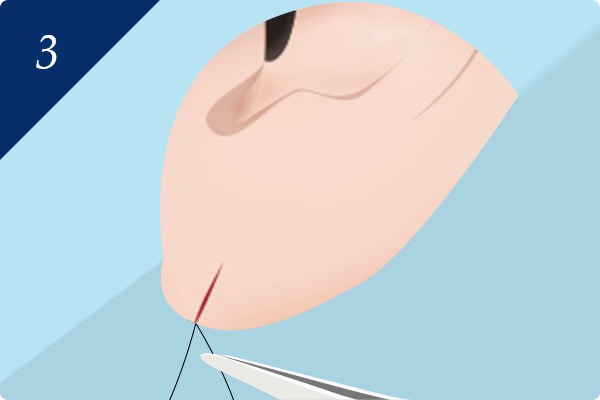
After local anesthesia is administered and the scarred tissue is excised, careful suturing is performed using thread finer than a strand of hair. The surgery takes approximately 30 minutes.
STEP 4: One Week After Surgery
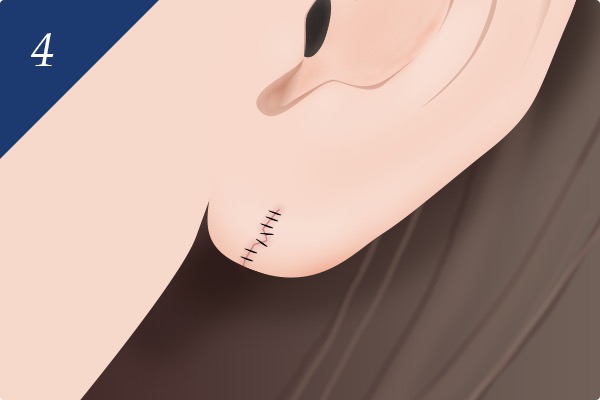
There is some swelling at the suture site, but the earlobe shape has been restored. Suture removal is performed at this stage.
STEP 5: Immediately After Suture Removal
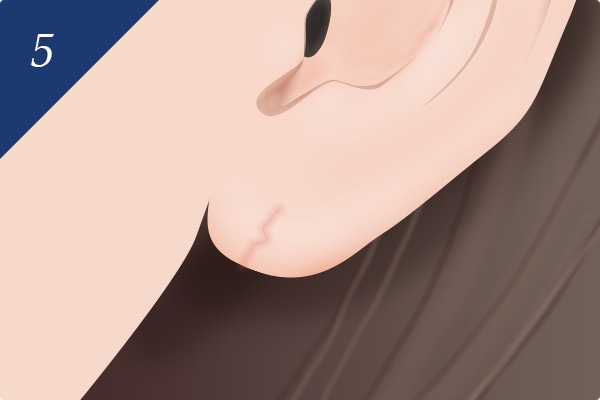
Some redness remains at the scar site immediately after suture removal, but the torn area has healed together cleanly.
STEP 6: Three Months and Beyond (Final Result)
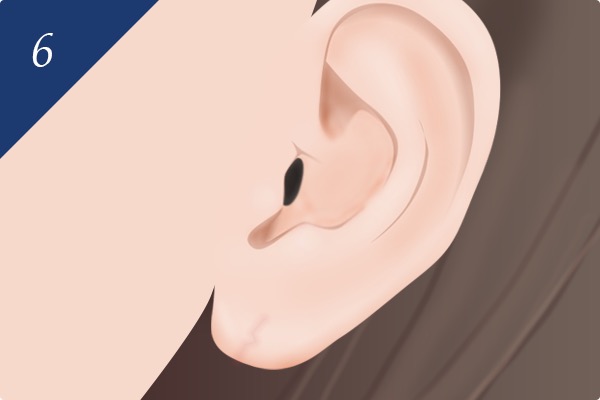
The redness at the scar site gradually fades, and becomes nearly imperceptible within 3 to 6 months. The natural shape of the earlobe is restored.
💰 Treatment Fees [Insurance-Covered and Self-Pay]
✅ Insurance-Covered Cases (Congenital Earlobe Cleft)
| Surgical fees for congenital earlobe cleft | |
| Per side (30% patient co-payment) | Approx. ¥31,010 |
| ※ Includes initial consultation fee and prescription fee ※ Eligibility for insurance coverage is determined based on a physician’s examination | |
💳 Self-Pay Cases (Piercing-Related Earlobe Tears and Piercing Hole Closure)
| Self-pay fee schedule | |
| Initial consultation fee | ¥3,300 (waived if surgery is performed on the same day) |
| Follow-up consultation fee | ¥1,100 |
| [Surgical fees] | |
| Piercing-related earlobe tear / earlobe cleft | ¥55,000 |
| Piercing hole closure (less than 2 mm) | ¥33,000 |
| Piercing hole closure (2 mm or more, less than 1 cm) | ¥55,000 |
| Piercing hole closure (1 cm or more) | ¥88,000 |
| ※ All prices are tax-inclusive; cost of medications used during surgery is included | |
📄 For Patients with Private Medical Insurance
Patients enrolled in a medical insurance plan through a life insurance company or mutual aid association may be eligible to receive a surgical benefit payment if they undergo surgery under insurance coverage following a physician’s examination. The procedure name will be listed as “Auricular Reconstruction.” Please check with your insurance company. If a physician’s certificate is required, please inform us at the time of your visit.
❓ Frequently Asked Questions
The procedure is performed under local anesthesia, so there is very little discomfort during surgery. You may feel a brief mild sensation from the anesthetic injection at the start. Once the anesthesia has taken effect, you will be able to feel touch but generally experience no pain throughout the surgery.
The surgery takes approximately 30 minutes and can be performed as a same-day outpatient procedure. The basic course involves two visits: the day of surgery and suture removal 7 to 14 days later. Additional follow-up appointments may be recommended depending on your progress.
Post-operative swelling typically subsides within approximately one week. Mild puffiness may be noticeable for 1–2 weeks. Redness at the scar site gradually fades over approximately three months, and the final result is generally seen around 6 months after surgery. The scar becomes nearly imperceptible over time.
Once the scar has fully stabilized — generally 6 months after surgery — it is possible to get pierced at a slightly different position. However, we recommend avoiding the exact scar site, as it consists of scar tissue. Please discuss re-piercing in more detail at your post-operative follow-up appointment.
For approximately 1 to 2 weeks until suture removal, please avoid getting the area wet, rubbing it firmly, and engaging in strenuous exercise. Hair washing and face washing are permitted from the day after surgery, but please avoid the suture site. We also recommend refraining from alcohol for a few days after surgery.
Although very rare, the following may occur: Infection (if symptoms such as fever, persistent swelling, or pain continue, please seek prompt medical attention); keloid or hypertrophic scarring (depending on an individual’s skin type, the scar may become raised — this can be treated with oral medication or injections); hematoma (if blood collects, drainage may be required). Should any such symptoms arise, our clinic will respond promptly and appropriately.
⭐ 6 Reasons Patients Choose IC Clinic Ikebukuro
1. Extensive Surgical Experience — Hundreds of Cases Each Year
Our clinic has extensive experience in earlobe cleft surgery, with patients traveling from across Japan, including Tohoku and Okinawa. This wealth of experience across a wide variety of cases underpins our clinical expertise.
2. Advanced Techniques by Board-Certified Plastic Surgeons
Our plastic surgeons specializing in auricular reconstruction employ advanced plastic surgery techniques such as Z-plasty and W-plasty, pursuing a minimally visible, natural-looking result.
3. Precise, Meticulous Suturing with Ultra-Fine Thread
We use suture thread finer than a strand of hair to perform millimeter-level precision suturing. This delicate technique helps minimize post-operative scarring.
4. Attentive Pain Management
In order to minimize patient discomfort, we take thorough care to reduce discomfort at every stage, from anesthesia through to suturing. We also respond appropriately to any post-operative discomfort.
5. Same-Day Outpatient Surgery Available
The procedure takes approximately 30 minutes and requires no hospital admission. Even patients with busy schedules can undergo treatment with minimal impact on work or school.
6. Convenient Access — 5-Minute Walk from Ikebukuro Station
Just a 5-minute walk from JR Ikebukuro Station. Our clinic is easily accessible from this major terminal station served by multiple rail lines, making it convenient even for patients traveling from farther away.

🙋 We Welcome Patients Like These
- 😔 Those whose earlobe has been torn by a piercing and who have been covering it with their hair
- 👶 Those who feel self-conscious about an earlobe shape they were born with
- 💼 Those preparing for job hunting or a career change who wish to close their piercing holes
- ⭕ Those who wish to close a gauge (body piercing) hole
- 📏 Those who wish to correct a stretched piercing hole
- ⏰ Those who waited hoping it would heal on its own, but have realized it will not
Earlobe concerns can be addressed with appropriate treatment. Please feel free to reach out for a consultation.
📚 References
- Japanese Society of Plastic and Reconstructive Surgery. “Clinical Practice Guidelines for Plastic Surgery.” 2015 edition.
- Japan Society for Head and Neck Surgery. “Standard Surgical Techniques for Auricular Reconstruction.” Society Journal, 2019.
- Ministry of Health, Labour and Welfare. “Insurance Coverage Criteria for Congenital Conditions.” Notification No. Iseihatu 234, 2020.
- Japan Society of Aesthetic Plastic Surgery (JSAPS). “Prevention and Treatment of Piercing-Related Complications.” Aesthetic Surgery Journal (Japan), 2021.
- Japanese Society for Wound Surgery. “Clinical Practice Guidelines for Scar and Keloid Treatment.” Revised 2018 edition.